This guide is written by Ann, FKY's Sales Director & B2B Belt Project Consultant, for product teams sourcing custom belt programs. It offers a buyer framework, not legal, compliance or test advice; verify product-specific requirements with the appropriate professionals and evidence.
01.
Approve a defined sample, not a general impression
Sample approval is the point where the buyer converts a product direction into a controlled production reference. Record the sample version, date, model, colour and the documents reviewed with it. If the team simply writes 'approved' in an email, later reviewers may not know which physical sample, photograph or revision the decision refers to.
Use the checklist with the actual brief, quotation and latest artwork. It is not a replacement for product-specific quality or compliance review. Its purpose is to make buyer decisions visible before bulk production begins.
- Assign a sample version and approval date
- Reference the latest specification and artwork files
- List accepted deviations and remaining open points
- Name the person or team authorised to approve the sample
02.
Compare the sample with the approved product brief
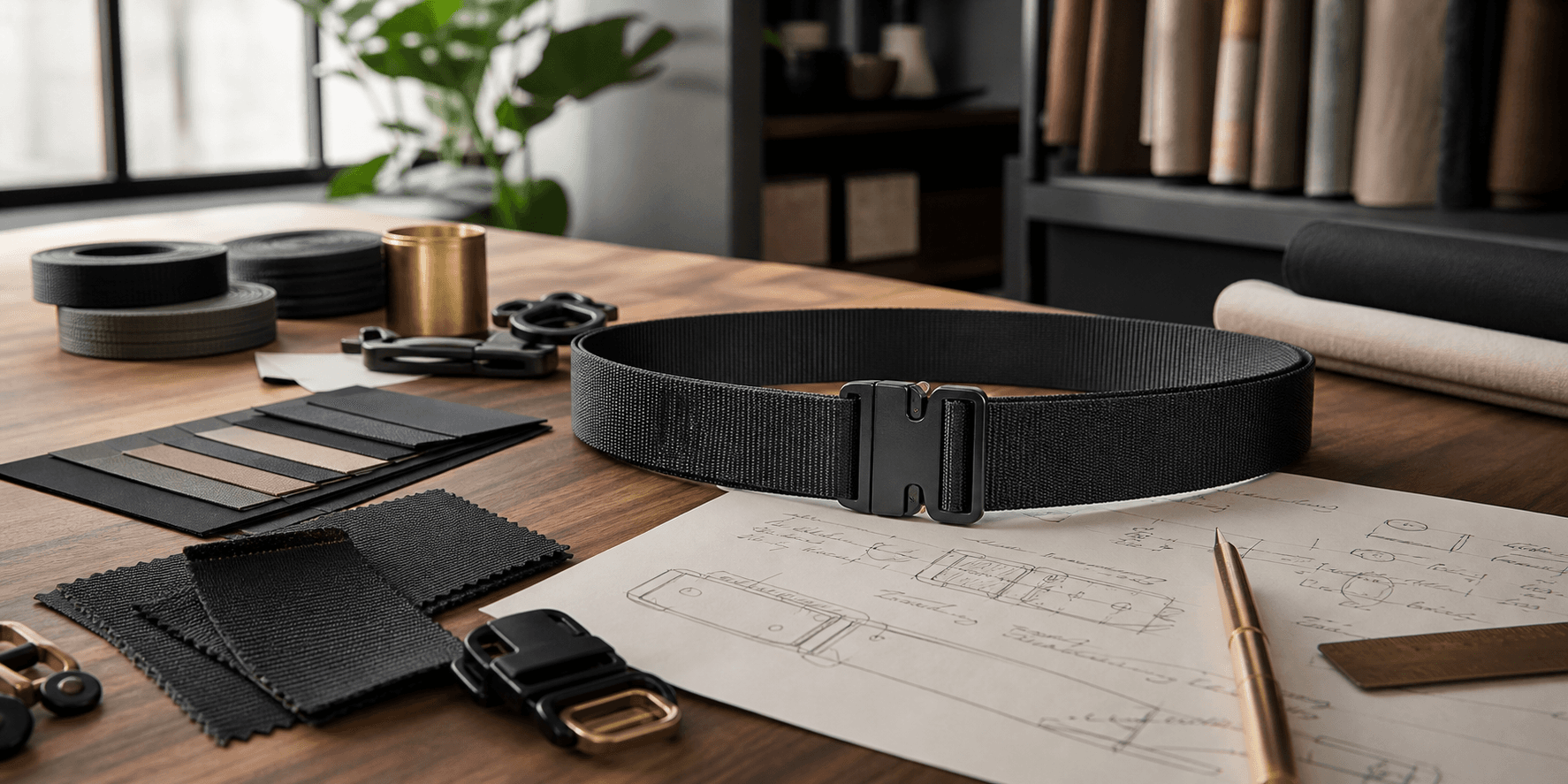
Check that the sample represents the intended product category, user, target market and development route. Confirm the strap construction, buckle direction, adjustment method, size range, colourway, logo treatment and packaging scope against the latest written brief. A visually attractive sample may still be wrong if it solves a different product requirement.
When a requested feature was changed during development, make the revised decision explicit. The approved sample and the specification should tell the same story. If they do not, correct the record before the team authorises production.
03.
Review dimensions and the stated tolerance range
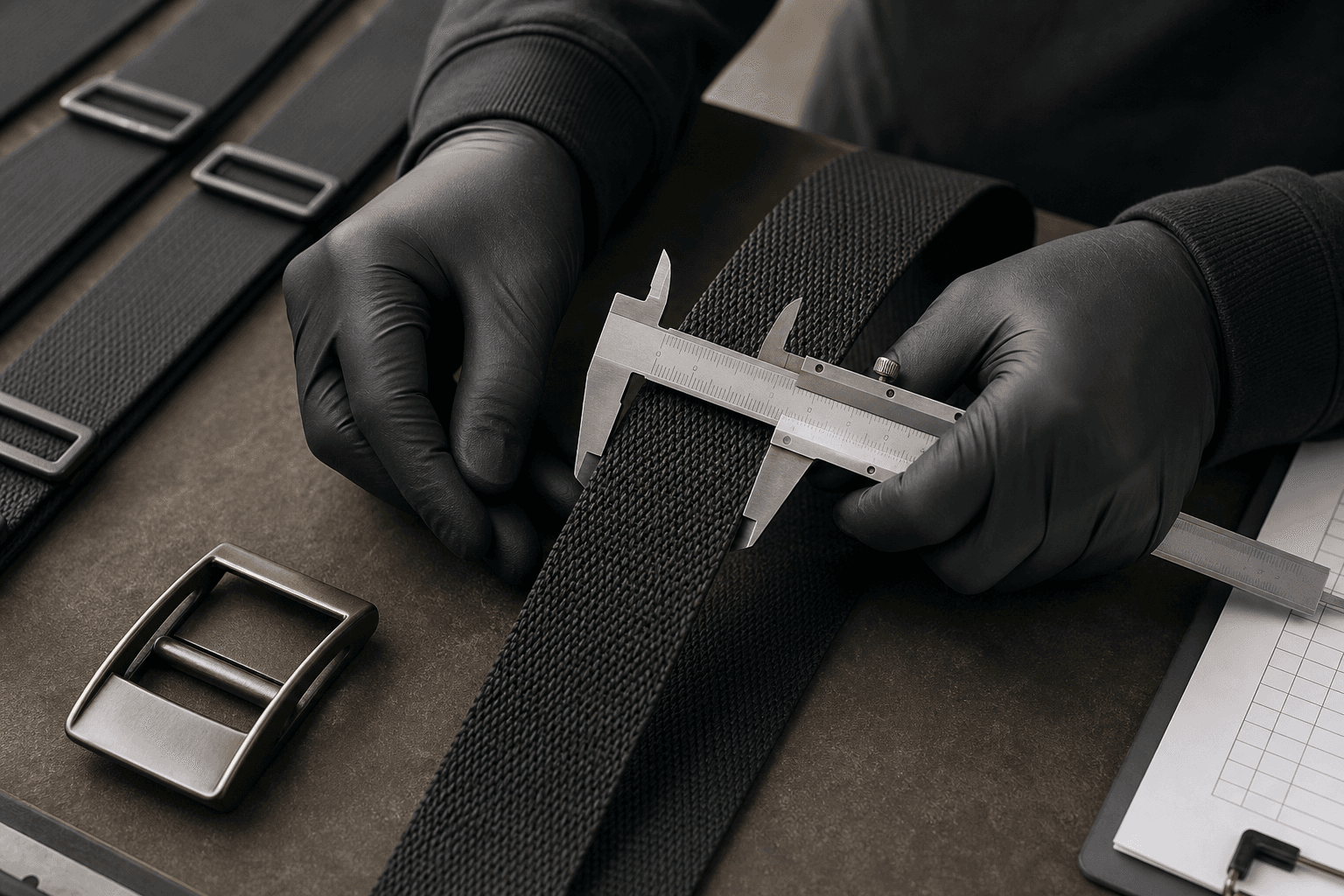
Measure the dimensions that affect fit, appearance, assembly and packaging. These may include strap width, finished length, buckle dimensions, branding placement or other product-specific points. Do not create a universal tolerance rule for every belt; material, construction and process influence what range is appropriate.
FKY products have an applicable tolerance range, which should be stated in advance for the project. Review the range before approval and identify any dimension that needs tighter control or a different evaluation method. An approved sample is a reference for controlled production, not a promise of zero variation.
04.
Inspect materials, construction and buckle operation
Compare the actual strap material, weave, edge appearance, stiffness and colour with the approved direction. Review stitching, end treatment, keeper, labels and the way the belt lies when worn or displayed. Operate the buckle and adjustment path repeatedly, looking for issues such as twisting, unexpected friction or a mismatch between the hardware and webbing.
Functional observations should be recorded in specific language. If the intended use has a critical performance, load, safety or compliance requirement, define and evaluate it through the appropriate test or professional review. Visual approval alone cannot establish a product claim.
05.
Confirm colour, branding, finish and packaging
Review colour under an agreed viewing condition and compare it with the approved swatch or reference. Check logo scale, position, orientation and finish on the actual product surface. For hardware, inspect the visible finish and any engraved, printed or attached branding from the angles customers will see.
If packaging is included in the sample stage, verify the layout, copy, barcode or label position, protective method and packing sequence. Record whether packaging is fully approved or remains subject to a separate proof. This avoids treating a product sample as approval for materials the team has not yet reviewed.
06.
Plan testing and third-party review as a separate decision
FKY supports third-party product testing. The required standard, sample quantity, laboratory, cost, schedule and responsibility should be confirmed for each project. Testing support does not mean that one report automatically applies to every material, colour, model or destination market.
Sample fees, any refund or order-credit arrangement, and the sample-making cycle vary by product and cost. These terms should be written in the quotation or sample agreement. Do not assume that a sample fee is refundable or that one timeline applies to all products.
07.
Classify comments before giving approval
Separate feedback into three groups: must change before approval, accepted for this project, and optional for a future revision. Use annotated photographs or a numbered list so each comment can be answered. Avoid phrases such as 'make it better' that do not tell the development team what should change or how the buyer will evaluate the next sample.
A complete approval pack should include approved sample photographs, the product specification, artwork, colour and material references, tolerance notes, packaging instruction and written acceptance. If a physical sample is the master reference, identify where it will be stored and how future teams should refer to it.
08.
Control changes after approval and before shipment
After the sample is approved, bulk production begins. Any later change to material, colour, artwork, dimensions, construction or packaging should be reviewed for its effect on price, timing, tooling and approval status before it is accepted. A written change record protects both the buyer and the production team.
Before shipment, FKY provides finished-product video or photographs for review and also supports third-party inspection. The inspection scope, provider, timing, cost and acceptance criteria should be agreed for the project. Photos or video are useful review evidence, but they do not automatically replace a physical or third-party inspection when the buyer requires one.
FAQ
Buyer questions, answered.
What should a custom belt sample approval include?
Identify the sample version and check it against the current specification, artwork, materials, dimensions, tolerance notes, branding, function and packaging scope.
Can FKY support third-party product testing?
Yes. The standard, laboratory, sample quantity, cost, schedule and scope must be confirmed for the specific product and market.
Is the custom belt sample fee refundable?
The refund or order-credit policy and the sample-making cycle vary by product and cost. Use the project quotation or sample agreement as the reference.
What happens after sample approval?
Bulk production begins. Changes after approval should be reviewed and recorded because they may affect price, timing, tooling or the approved result.
Can buyers arrange a third-party inspection before shipment?
Yes. FKY supports third-party inspection. The provider, scope, timing, cost and acceptance criteria should be agreed for the project.
Does an approved sample mean there will be no production variation?
No. Products have an applicable tolerance range that should be disclosed and agreed in advance. The approved sample is a controlled reference, not a zero-variation guarantee.
PRODUCT LINKS
Continue with a relevant product or development page.
Ready to source?