This guide is written by Ann, FKY's Sales Director & B2B Belt Project Consultant, for product teams sourcing custom belt programs. It offers a buyer framework, not legal, compliance or test advice; verify product-specific requirements with the appropriate professionals and evidence.
01.
Begin with a brief that makes decisions visible
A manufacturer can only quote and advise on the information a buyer makes visible. Before contacting suppliers, write one short brief that answers the commercial question first: who is the buyer, where will the belt be sold, and what job must it do? An outdoor accessory, a workwear belt, a fashion web belt and an EDC carry belt may all use woven straps, but they call for different priorities in hand feel, adjustment, hardware, finishing and price architecture.
The useful brief is not a perfect technical drawing. It is a decision record. Include a reference image, target strap width, approximate length range, intended buckle style, colour direction, estimated order quantity, target market and any must-have brand details. Mark what is fixed and what is open to recommendation. That distinction prevents a supplier from treating a preference as a non-negotiable specification.
- User, channel and intended use
- Strap width, adjustment range and silhouette
- Material and buckle direction, including references
- Branding, packaging, target quantity and decision date
02.
Assess the product system, not a single component
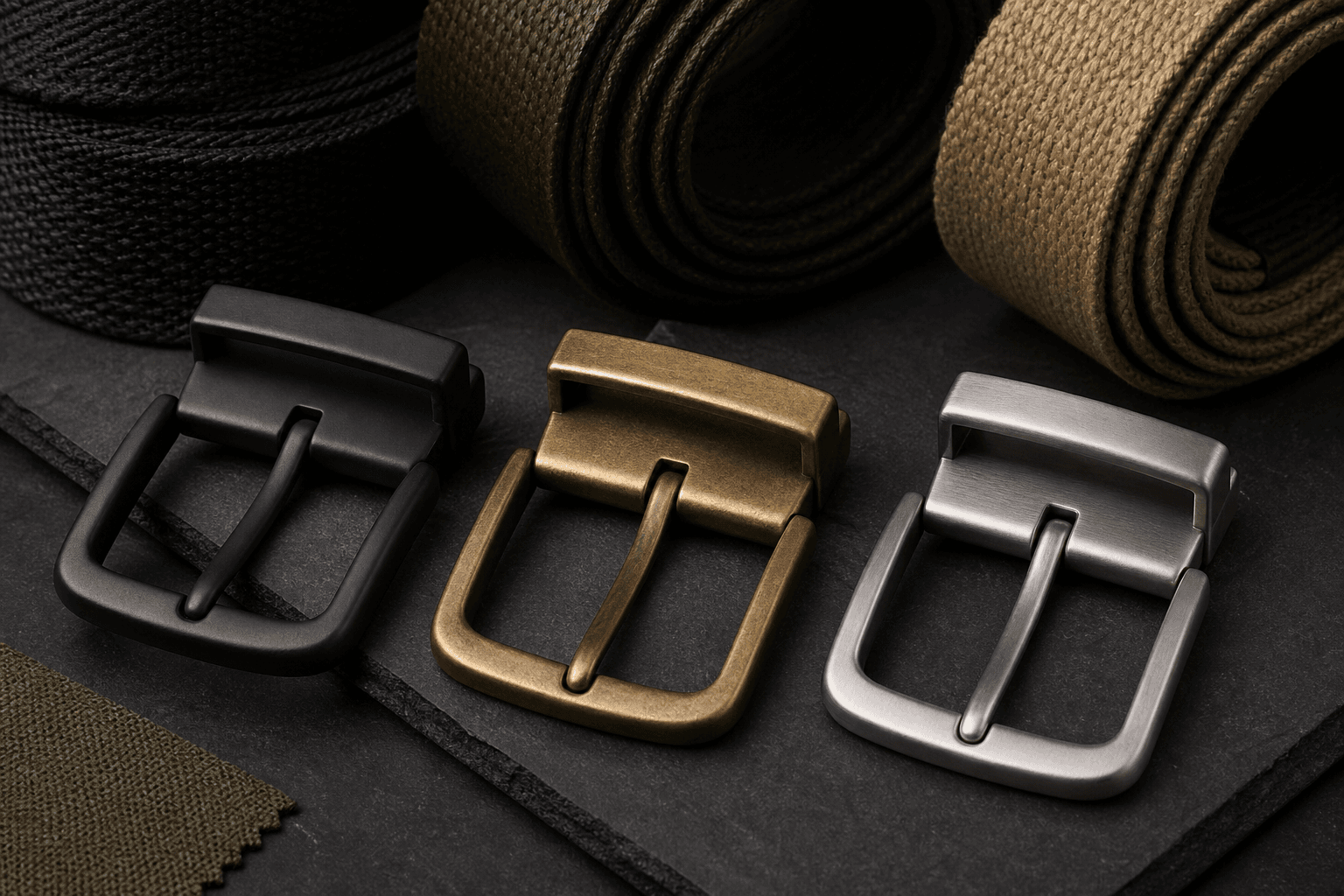
Belt sourcing is a systems decision. The webbing, buckle, end treatment, keeper, label and packaging meet each other in the finished product. A buckle that looks appropriate in a flat image may feel too heavy for a lightweight strap; a dense webbing may not feed smoothly through an adjustment path; a strong colour choice may require extra colour control when it is repeated across woven material, trim and packaging.
Ask each prospective supplier to explain how it would connect the chosen parts. A strong response should be specific about the questions it still needs answered rather than promising that every option is interchangeable. This is also the point to compare physical samples where possible. Screens communicate style; samples reveal edge feel, stiffness, weight, surface texture and the sound and force of an adjustment action.
03.
Ask how customization becomes a controlled process
Private label is more than placing a logo on an existing belt. It is the process of making a consistent product expression across hardware, webbing, labels and the customer’s unboxing moment. During an early conversation, ask what artwork or technical inputs are needed for each branding method, what needs approval before sampling, and which details may change the construction or lead time.
Useful suppliers separate a visual direction from a production-ready instruction. They should invite you to confirm logo placement, finish expectation, colour reference, label copy and packaging layout before treating a sample as final. That discipline reduces the familiar problem in which the sample is attractive but the project team has not agreed what exactly it proves.
04.
Treat quality questions as shared acceptance criteria
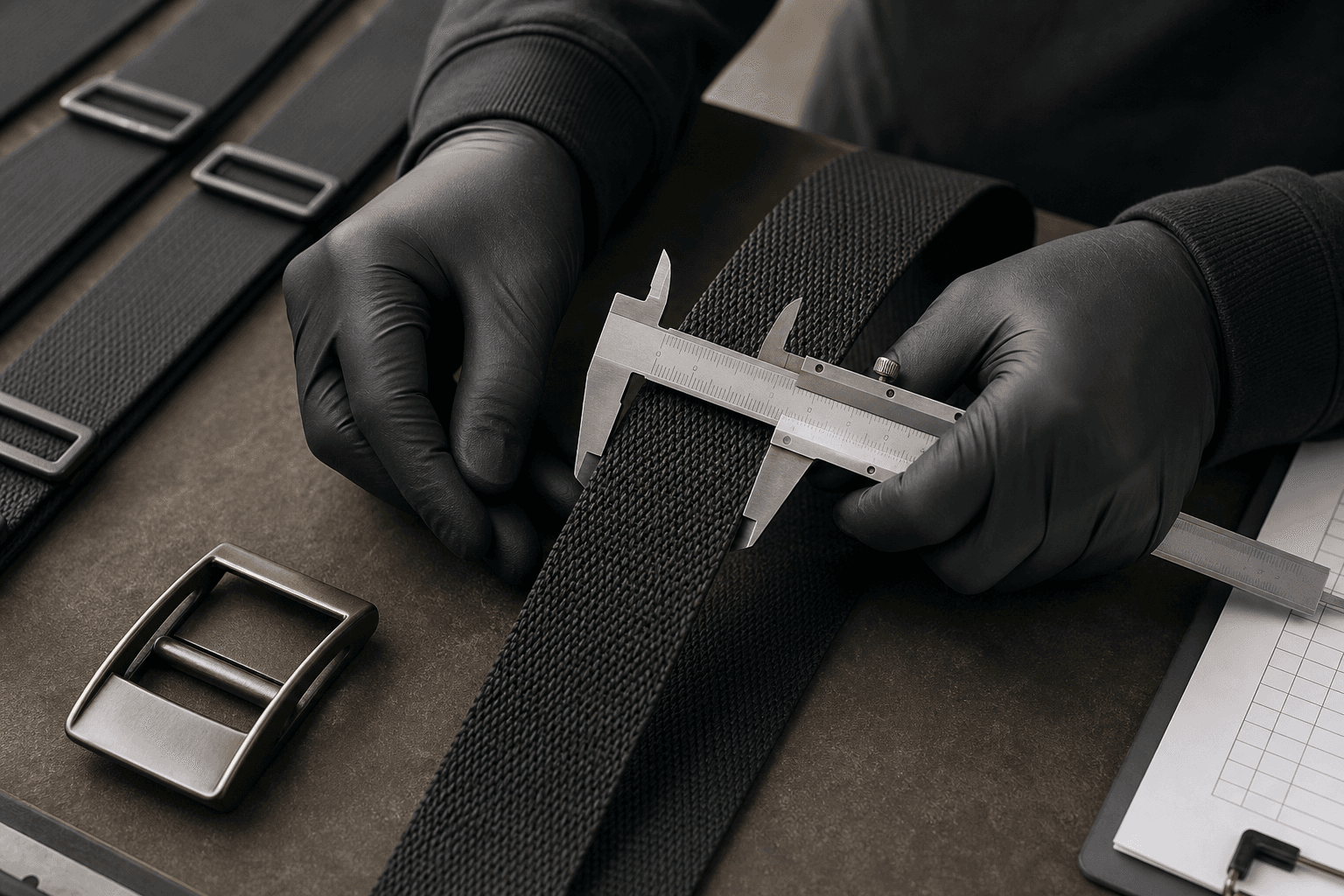
Quality control is most useful when it is discussed before production, not after a shipment is packed. Instead of asking a generic question such as ‘Do you have quality control?’, ask how a requirement will be checked. For example: What visual standard is used for buckle finish? What dimensions must be confirmed? How are branding placements compared with approved artwork? Which parts of the belt are checked during assembly and at final packing?
No responsible buyer should infer a test result, certification or performance claim from a marketing image. Request evidence that is relevant to the product and market, and have it reviewed by the appropriate compliance or quality professional. The supplier’s value is clarity: a documented approval sample, clear measurable requirements and an agreed way to manage deviations.
05.
Compare sample communication, not only sample appearance
A sample is a conversation tool. When comparing factories, consider how the team records open questions, sends progress updates and explains alternatives. A quick sample with unclear material identity or no reference to your brief can create more risk than a carefully reviewed sample that surfaces decisions early. The best signal is often whether the supplier can restate your priorities accurately and flag trade-offs in language your buying team can act on.
Keep a simple comparison sheet for every candidate: accuracy against brief, response quality, sample notes, change handling, visual finish and unanswered questions. This gives commercial and product stakeholders a shared view instead of reducing the selection to the lowest first quote.
06.
Use a practical supplier scorecard
A scorecard does not replace judgement, but it makes judgement auditable. Score the elements that affect your project: clarity of quote, suitability of suggested construction, sample communication, customization path, quality-documentation approach and commercial fit. Weight the areas that matter for your launch. A tightly specified uniform program may weight repeatability; a new direct-to-consumer brand may weight design iteration and content-ready finishes.
Ask the same core questions of every supplier. Comparable answers reveal where an apparently low price omits a necessary component, approval stage or packaging item. They also prevent procurement teams from comparing two quotes that are not actually for the same belt.
- Does the quotation match the brief line by line?
- Which assumptions are written down?
- Who owns artwork approval and specification sign-off?
- How will changes be confirmed before the next stage?
07.
Plan the handoff from quote to production
Before you place an order, turn the approved sample into a concise approval pack. Include approved photos, material and hardware references, size information, artwork files, packaging instructions and the buyer’s written acceptance notes. If a point remains open, label it as open; do not allow it to become an accidental assumption. This pack is often more valuable than a long email chain because it creates one source of truth for both sides.
Finally, schedule the next decision rather than just asking for an update. The buyer can confirm a revised artwork proof, a packaging mock-up or a pre-production detail at a defined stage. A predictable approval rhythm makes communication more useful and protects the relationship when priorities change.
08.
Choose the partner that improves your next decision
The right custom belt manufacturer is not simply the one that says yes most quickly. It is the one that helps you make informed choices without overstating what is known. Look for clear questions, traceable approvals and practical product reasoning. Those behaviours support a more reliable private-label program whether you are launching one hero belt or building a collection.
If you already have a brief, sending it early is the fastest way to receive a relevant response. If you only have a product direction, share the use case, visual references and target market. A structured conversation can then convert the idea into the specifications needed for sampling.
FAQ
Buyer questions, answered.
What should I send in my first belt inquiry?
Send the use case, a reference image, preferred strap width, buckle direction, branding needs, estimated quantity and destination market. State which choices are fixed and which you want advice on.
Can a supplier recommend materials?
Yes, but make the end use clear and review any recommendation through samples and your own quality or compliance process.
How should I compare quotes?
Compare written scope, included components, assumptions, approval points and packaging—not only the total price.
PRODUCT LINKS
Continue with a relevant product or development page.
Ready to source?